
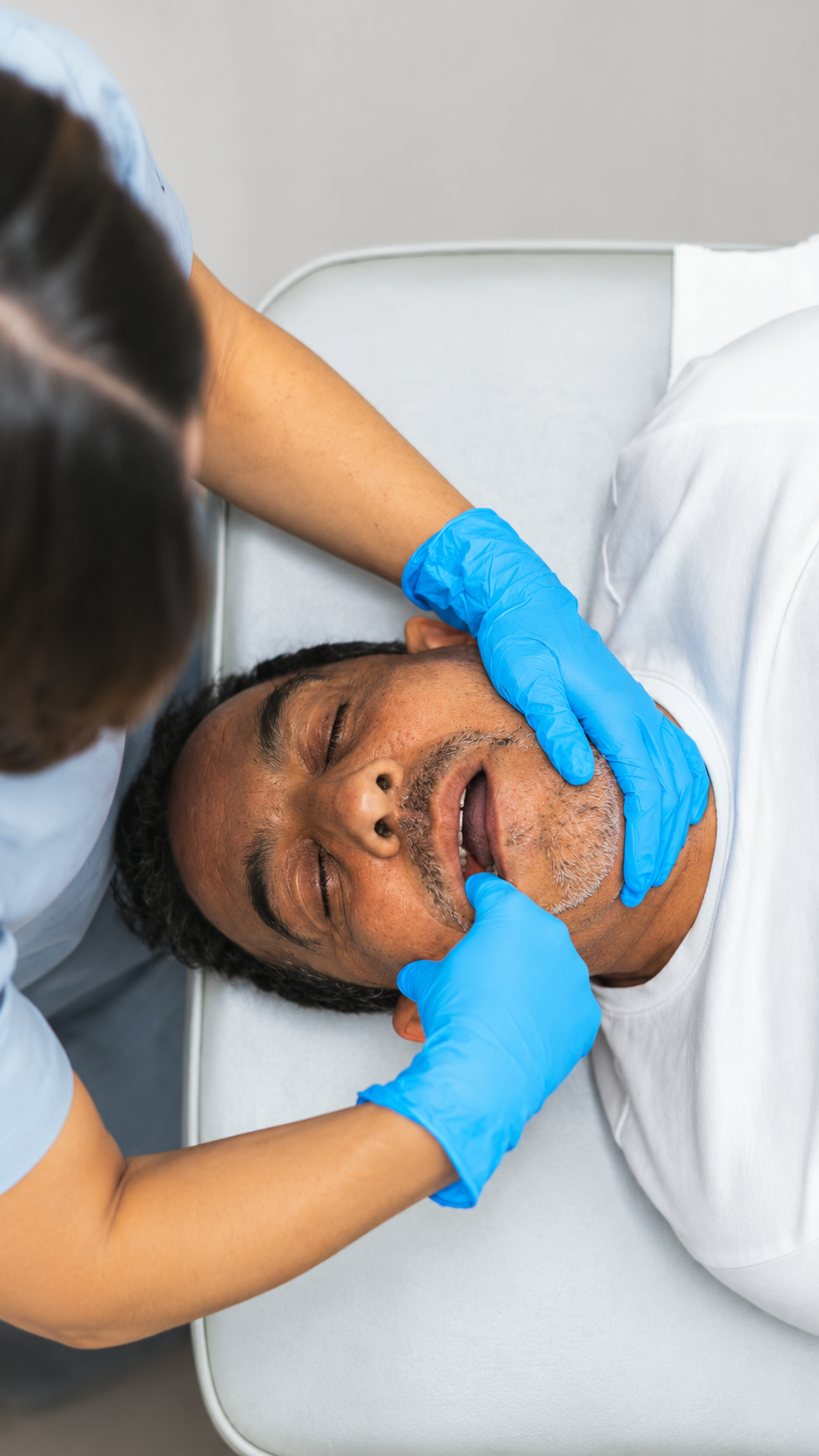
What is intraoral TMJ treatment?
Intraoral treatment uses a gloved finger inside the mouth to assess or treat specific jaw muscles. It is optional, performed only by an appropriately trained physiotherapist, and requires clear informed consent.

 Our services
Personalized TMJ physiotherapy for jaw pain, stiffness, headaches, clicking, and temporomandibular joint dysfunction. Available at our Ottawa and Etobicoke clinics.
 ABOUT tmj physiotherapyAt Peloraa
 Care centred around you
Research suggests that TMJ disorders and pelvic pain can sometimes occur together as part of broader muscle-tension and persistent-pain patterns. Emerging research has also identified measurable relationships between jaw treatment and pelvic floor muscle activity. This does not mean that jaw pain causes pelvic floor dysfunction, but it supports assessing the body as a connected system.
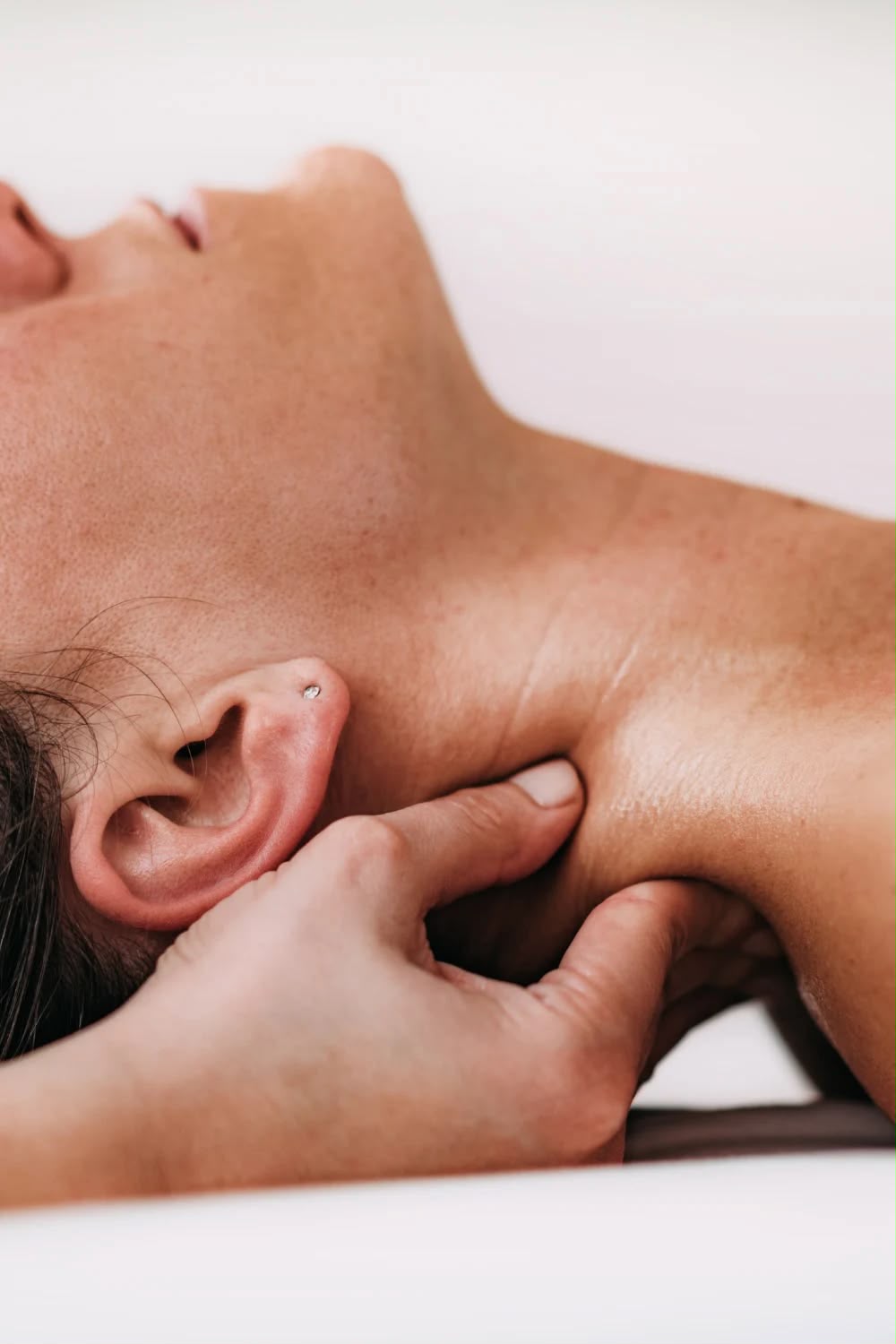
At Peloraa, our pelvic health physiotherapist has completed advanced training in TMJ assessment and treatment, allowing us to consider both jaw symptoms and the possible body-pelvic connection. Treatment may include manual therapy, external or intraoral muscle release, jaw and neck exercises, breathing strategies, and movement retraining.
At Peloraa, we look beyond the painful area to understand how your body works together.
Your care, thoughtfully consideredIntraoral treatment uses a gloved finger inside the mouth to assess or treat specific jaw muscles. It is optional, performed only by an appropriately trained physiotherapist, and requires clear informed consent.
Some areas may be tender during assessment or treatment, but care should remain tolerable. Your physiotherapist can adjust pressure, technique, or position at any time.
Peloraa’s pelvic health physiotherapist has completed advanced training in TMJ assessment and treatment. This allows the assessment to consider the jaw, neck, breathing, nervous system, and possible body-pelvic connections when relevant.
A little more clarityTMJ physiotherapy assesses and treats the jaw joint, chewing muscles, neck, posture, and movement patterns that may contribute to temporomandibular disorder symptoms. Treatment is personalized to your pain, jaw mobility, function, and goals.
Common symptoms include jaw or facial pain, clicking or popping, jaw locking, difficulty opening the mouth, pain with chewing or yawning, headaches, neck tension, and teeth clenching or grinding.
Physiotherapy may help when clicking is associated with pain, muscle tension, limited movement, or altered jaw mechanics. Painless clicking does not always require treatment, but locking or reduced opening should be assessed.
TMJ disorders can occur alongside headaches and neck pain because the jaw and neck regions interact through muscles, movement, and pain-processing systems. Assessment helps determine which factors may be relevant to your symptoms.
Physiotherapy may help address jaw-muscle tension, awareness, breathing, posture, and habits associated with clenching. Dental assessment may also be appropriate for tooth wear, bite concerns, or a night guard.
Prolonged mouth opening, dental procedures, or oral surgery can sometimes be followed by jaw-muscle tension, pain, or reduced opening. Seek guidance from your dentist or surgeon regarding healing restrictions before physiotherapy.
Research suggests that TMJ disorders and pelvic pain can sometimes overlap within broader persistent-pain and muscle-tension patterns. This does not mean one condition directly causes the other, but a whole-body assessment may be useful when both are present.
Peloraa provides TMJ physiotherapy in Etobicoke and Ottawa, subject to advanced-trained practitioner availability. Contact your preferred location to book an assessment.
Find your Peloraa location in Ottawa or Etobicoke, meet your lead therapist, and take your next step.

652 Flagstaff Dr, Unit #11
Ottawa, ON K2J 7J6
270 The Kingsway, Unit #207
Etobicoke, ON M9A 3T7
BEYOND THE CLINIC
Everyday conversations, a closer look at our care, and moments from our community. Follow along with us on Instagram.
Follow @the_peloraaA few moments from @the_peloraa. Swipe to explore on mobile.

