


01
Proactive Prenatal Pelvic Floor Physiotherapy
Prepare Before Problems Begin
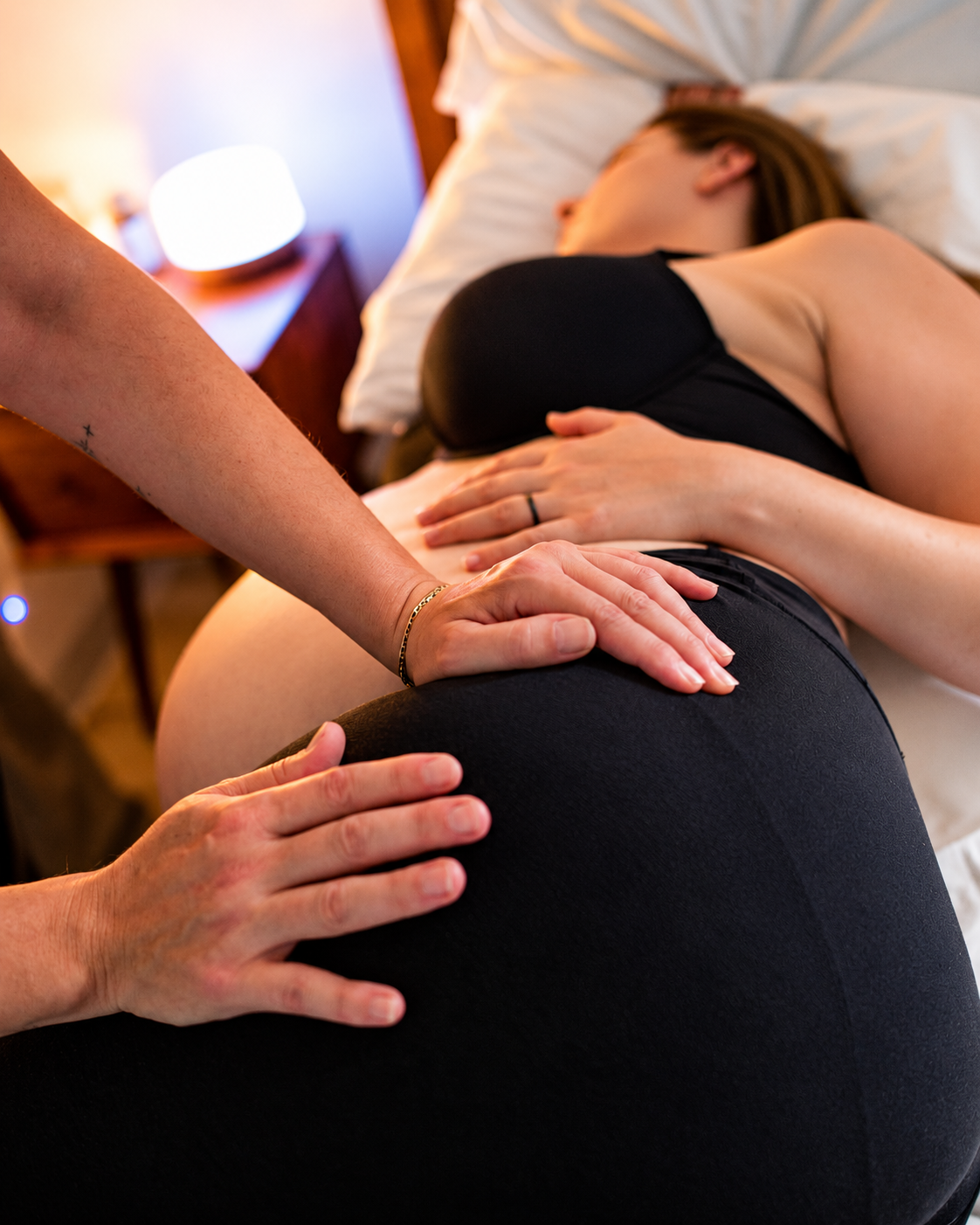
Pelvic health for every body
Read the introduction
Maybe nothing is actually wrong.
You are pregnant, your body is changing, and you simply want to understand what is happening before symptoms begin.
Perhaps this is your first pregnancy and you keep hearing about Kegels, core exercises, pelvic floor weakness, prolapse, tearing and postpartum recovery—but no one has explained what you should actually be doing.
Or maybe this is not your first pregnancy. You remember leaking urine after your last delivery, struggling with pelvic pressure, painful intercourse, constipation or feeling disconnected from your core, and this time you would like to prepare differently.
You are pregnant, your body is changing, and you simply want to understand what is happening before symptoms begin.
Perhaps this is your first pregnancy and you keep hearing about Kegels, core exercises, pelvic floor weakness, prolapse, tearing and postpartum recovery—but no one has explained what you should actually be doing.
Or maybe this is not your first pregnancy. You remember leaking urine after your last delivery, struggling with pelvic pressure, painful intercourse, constipation or feeling disconnected from your core, and this time you would like to prepare differently.
You do not have to wait until something hurts to see a pelvic floor physiotherapist.
Proactive prenatal pelvic floor physiotherapy is about learning how your pelvic floor, abdominal wall, breathing, hips and pelvis are adapting during pregnancy and identifying areas that may benefit from support before they become significant problems.
Pregnancy naturally places increasing demands on the pelvic floor. NICE recommends encouraging pelvic floor muscle training during pregnancy to help prevent symptoms of pelvic floor dysfunction and emphasizes that supervised training should assess both the ability to contract and relax the pelvic floor.
At Peloraa, proactive prenatal care is not simply:
“Start doing more Kegels.”
It is about understanding what your body needs.
Proactive prenatal pelvic floor physiotherapy is about learning how your pelvic floor, abdominal wall, breathing, hips and pelvis are adapting during pregnancy and identifying areas that may benefit from support before they become significant problems.
Pregnancy naturally places increasing demands on the pelvic floor. NICE recommends encouraging pelvic floor muscle training during pregnancy to help prevent symptoms of pelvic floor dysfunction and emphasizes that supervised training should assess both the ability to contract and relax the pelvic floor.
At Peloraa, proactive prenatal care is not simply:
“Start doing more Kegels.”
It is about understanding what your body needs.

At Peloraa
At Peloraa
At Peloraa, proactive prenatal physiotherapy begins with understanding your pregnancy, your body and what you want to feel prepared for.
We may discuss bladder and bowel function, exercise, previous pregnancies and deliveries, pelvic pain, intimacy, lifting demands, work, birth plans and postpartum concerns.
Assessment may include your breathing, abdominal function, hips, back, pelvis, movement and pelvic floor coordination.
An internal vaginal pelvic floor assessment may provide useful information for some people, but it is never mandatory. There is a great deal we can assess externally, and every part of your appointment progresses according to your informed consent.
From there, your plan may include pelvic floor strengthening or relaxation, breathing and pressure-management strategies, mobility, individualized exercise, bowel and bladder education and preparation for later pregnancy and birth.
The purpose is not to predict or control your pregnancy.
It is to help you enter birth and postpartum with a better understanding of the body you are living in.
Listen. Understand. Prepare. Prevent. Build Confidence.
That's the Peloraa Way.
We may discuss bladder and bowel function, exercise, previous pregnancies and deliveries, pelvic pain, intimacy, lifting demands, work, birth plans and postpartum concerns.
Assessment may include your breathing, abdominal function, hips, back, pelvis, movement and pelvic floor coordination.
An internal vaginal pelvic floor assessment may provide useful information for some people, but it is never mandatory. There is a great deal we can assess externally, and every part of your appointment progresses according to your informed consent.
From there, your plan may include pelvic floor strengthening or relaxation, breathing and pressure-management strategies, mobility, individualized exercise, bowel and bladder education and preparation for later pregnancy and birth.
The purpose is not to predict or control your pregnancy.
It is to help you enter birth and postpartum with a better understanding of the body you are living in.
Listen. Understand. Prepare. Prevent. Build Confidence.
That's the Peloraa Way.
Understand your journey
What You Should Know About Proactive Prenatal
Pelvic Floor Physiotherapy
Find clear, supportive answers to common questions about urinary incontinence, bladder leakage, symptoms, treatment, and pelvic health physiotherapy.
01Why Start Before Symptoms Appear?
Pelvic health care is often introduced only after someone develops leakage, prolapse symptoms, pelvic pain or postpartum difficulties. But pregnancy gives us an opportunity to be…Read more...
Why Start Before Symptoms Appear?
Pelvic health care is often introduced only after someone develops leakage, prolapse symptoms, pelvic pain or postpartum difficulties. But pregnancy gives us an opportunity to be…
Read more...Pelvic health care is often introduced only after someone develops leakage, prolapse symptoms, pelvic pain or postpartum difficulties.
But pregnancy gives us an opportunity to be more proactive.
NICE recommends pelvic floor muscle training during pregnancy as a preventive strategy and specifically states that supervised programs should be tailored to a person's ability to both contract and relax, their symptoms and their individual goals.
This means prevention should not simply be a generic sheet of exercises.
One pregnant person may need improved strength.
Another may already have a strong but overactive pelvic floor and benefit more from learning relaxation.
Someone else may need help managing pressure when lifting their toddler or exercising.
The same pregnancy does not create the same pelvic floor needs in every body.
But pregnancy gives us an opportunity to be more proactive.
NICE recommends pelvic floor muscle training during pregnancy as a preventive strategy and specifically states that supervised programs should be tailored to a person's ability to both contract and relax, their symptoms and their individual goals.
This means prevention should not simply be a generic sheet of exercises.
One pregnant person may need improved strength.
Another may already have a strong but overactive pelvic floor and benefit more from learning relaxation.
Someone else may need help managing pressure when lifting their toddler or exercising.
The same pregnancy does not create the same pelvic floor needs in every body.
02What Can Proactive Prenatal Pelvic Floor Physiotherapy Help With?
AreaWhat We May Look AtWhy It MattersPelvic Floor StrengthHow well you can contract and sustain a pelvic floor contraction.May help with bladder support and urinary continence…Read more...
What Can Proactive Prenatal Pelvic Floor Physiotherapy Help With?
AreaWhat We May Look AtWhy It MattersPelvic Floor StrengthHow well you can contract and sustain a pelvic floor contraction.May help with bladder support and urinary continence…
Read more...Area
What We May Look At
Why It Matters
Pelvic Floor Strength
How well you can contract and sustain a pelvic floor contraction.
May help with bladder support and urinary continence during pregnancy and postpartum.
Pelvic Floor Relaxation
Whether you can fully let the pelvic floor go after contracting.
Relaxation and lengthening are important for bowel movements, comfortable intimacy and vaginal birth preparation.
Breathing & Pressure Management
How your diaphragm, abdominal wall and pelvic floor work together during lifting, coughing and exercise.
Pregnancy increases abdominal pressure, and coordination can become increasingly important as your baby grows.
Bladder & Bowel Habits
Leakage, urgency, constipation, straining or incomplete emptying.
These symptoms are common but can often be addressed rather than simply accepted.
Core & Abdominal Function
How the abdominal wall adapts and how you manage everyday movement.
Helps maintain function as your body changes and prepares for postpartum recovery.
Exercise During Pregnancy
Walking, strength training, lifting and activity modification.
The goal is often to help you continue moving comfortably rather than unnecessarily stopping activity.
Birth Preparation
Pelvic floor awareness, relaxation, positions and perineal preparation later in pregnancy.
Helps you better understand what happens to the pelvic floor during vaginal birth.
03Why Start Before Symptoms Appear?
Pelvic health care is often introduced only after someone develops leakage, prolapse symptoms, pelvic pain or postpartum difficulties. But pregnancy gives us an opportunity to be…Read more...
Why Start Before Symptoms Appear?
Pelvic health care is often introduced only after someone develops leakage, prolapse symptoms, pelvic pain or postpartum difficulties. But pregnancy gives us an opportunity to be…
Read more...Pelvic health care is often introduced only after someone develops leakage, prolapse symptoms, pelvic pain or postpartum difficulties.
But pregnancy gives us an opportunity to be more proactive.
NICE recommends pelvic floor muscle training during pregnancy as a preventive strategy and specifically states that supervised programs should be tailored to a person's ability to both contract and relax, their symptoms and their individual goals.
This means prevention should not simply be a generic sheet of exercises.
One pregnant person may need improved strength.
Another may already have a strong but overactive pelvic floor and benefit more from learning relaxation.
Someone else may need help managing pressure when lifting their toddler or exercising.
The same pregnancy does not create the same pelvic floor needs in every body.
But pregnancy gives us an opportunity to be more proactive.
NICE recommends pelvic floor muscle training during pregnancy as a preventive strategy and specifically states that supervised programs should be tailored to a person's ability to both contract and relax, their symptoms and their individual goals.
This means prevention should not simply be a generic sheet of exercises.
One pregnant person may need improved strength.
Another may already have a strong but overactive pelvic floor and benefit more from learning relaxation.
Someone else may need help managing pressure when lifting their toddler or exercising.
The same pregnancy does not create the same pelvic floor needs in every body.
04Do I Need Kegels During Pregnancy?
Possibly—but they should be performed correctly and for the right reason. Pelvic floor muscle training can help prevent and manage pelvic floor symptoms during pregnancy,…Read more...
Do I Need Kegels During Pregnancy?
Possibly—but they should be performed correctly and for the right reason. Pelvic floor muscle training can help prevent and manage pelvic floor symptoms during pregnancy,…
Read more...Possibly—but they should be performed correctly and for the right reason.
Pelvic floor muscle training can help prevent and manage pelvic floor symptoms during pregnancy, particularly urinary leakage. NICE recommends supervised pelvic floor muscle training for pregnant women with stress or mixed urinary incontinence.
But pelvic floor health involves more than squeezing.
A healthy pelvic floor should be able to:
Contract. Hold. Relax. Lengthen. Coordinate. Respond to pressure.
If your pelvic floor is already tense or painful, repeatedly strengthening without learning to relax may not be the most appropriate starting point.
That is why Peloraa assesses first.
Pelvic floor muscle training can help prevent and manage pelvic floor symptoms during pregnancy, particularly urinary leakage. NICE recommends supervised pelvic floor muscle training for pregnant women with stress or mixed urinary incontinence.
But pelvic floor health involves more than squeezing.
A healthy pelvic floor should be able to:
Contract. Hold. Relax. Lengthen. Coordinate. Respond to pressure.
If your pelvic floor is already tense or painful, repeatedly strengthening without learning to relax may not be the most appropriate starting point.
That is why Peloraa assesses first.

How we support you
The Peloraa Way
The Peloraa Way: Prepare, Don't Panic
02
Prenatal Care Works Better as a Team
Pelvic floor physiotherapy complements—not replaces—your prenatal medical care.
Peloraa works alongside your midwife, obstetrician, family physician and maternity healthcare team. Your medical providers remain responsible for monitoring your pregnancy, baby's health, labour and any pregnancy-related complications.
Our role is to focus on movement, pelvic floor function, bladder and bowel health, exercise, musculoskeletal symptoms and physical preparation for birth and recovery.
Peloraa works alongside your midwife, obstetrician, family physician and maternity healthcare team. Your medical providers remain responsible for monitoring your pregnancy, baby's health, labour and any pregnancy-related complications.
Our role is to focus on movement, pelvic floor function, bladder and bowel health, exercise, musculoskeletal symptoms and physical preparation for birth and recovery.
At Peloraa, proactive prenatal physiotherapy begins with understanding your pregnancy, your body and what you want to feel prepared for.
We may discuss bladder and bowel function, exercise, previous pregnancies and deliveries, pelvic pain, intimacy, lifting demands, work, birth plans and postpartum concerns.
Assessment may include your breathing, abdominal function, hips, back, pelvis, movement and pelvic floor coordination.
An internal vaginal pelvic floor assessment may provide useful information for some people, but it is never mandatory. There is a great deal we can assess externally, and every part of your appointment progresses according to your informed consent.
From there, your plan may include pelvic floor strengthening or relaxation, breathing and pressure-management strategies, mobility, individualized exercise, bowel and bladder education and preparation for later pregnancy and birth.
The purpose is not to predict or control your pregnancy.
It is to help you enter birth and postpartum with a better understanding of the body you are living in.
Listen. Understand. Prepare. Prevent. Build Confidence.
That's the Peloraa Way.
We may discuss bladder and bowel function, exercise, previous pregnancies and deliveries, pelvic pain, intimacy, lifting demands, work, birth plans and postpartum concerns.
Assessment may include your breathing, abdominal function, hips, back, pelvis, movement and pelvic floor coordination.
An internal vaginal pelvic floor assessment may provide useful information for some people, but it is never mandatory. There is a great deal we can assess externally, and every part of your appointment progresses according to your informed consent.
From there, your plan may include pelvic floor strengthening or relaxation, breathing and pressure-management strategies, mobility, individualized exercise, bowel and bladder education and preparation for later pregnancy and birth.
The purpose is not to predict or control your pregnancy.
It is to help you enter birth and postpartum with a better understanding of the body you are living in.
Listen. Understand. Prepare. Prevent. Build Confidence.
That's the Peloraa Way.
A little more clarity
Short FAQs About Rectal Pain
01When should I start prenatal pelvic floor physiotherapy?
Read more
When should I start prenatal pelvic floor physiotherapy?
Read moreThere is no single required week. Some people attend early for proactive education, while others begin when symptoms arise or later in pregnancy for birth preparation.
02Do I need symptoms to see a pelvic floor physiotherapist?
Read more
Do I need symptoms to see a pelvic floor physiotherapist?
Read moreNo. Prenatal pelvic floor physiotherapy can also be preventive and educational.
03Should every pregnant person do Kegels?
Read more
Should every pregnant person do Kegels?
Read morePelvic floor training is encouraged during pregnancy, but the program should be individualized and include both contraction and relaxation.
04Can physiotherapy help prevent urinary leakage?
Read more
Can physiotherapy help prevent urinary leakage?
Read morePelvic floor muscle training during pregnancy can help prevent pelvic floor symptoms and is recommended for pregnant people with stress or mixed urinary incontinence.
05Do I need an internal examination?
Read more
Do I need an internal examination?
Read moreNo. Internal assessment is optional and based entirely on your comfort and consent.
06Can I come even if I am planning a C-section?
Read more
Can I come even if I am planning a C-section?
Read moreYes. Your pelvic floor, abdominal wall and movement system adapt throughout pregnancy regardless of delivery method.
References & Clinical Credits
National Institute for Health and Care Excellence (NICE). Pelvic Floor Dysfunction: Prevention and Non-Surgical Management (NG210).Recommends pelvic floor muscle training during pregnancy and individualized assessment of pelvic floor contraction and relaxation.
NICE. Antenatal Care (NG201). Includes recommendations for physiotherapy referral for pregnancy-related pelvic girdle pain.
Royal College of Obstetricians and Gynaecologists (RCOG). Your Pelvic Floor. Provides education regarding pelvic floor function during pregnancy, birth and postpartum recovery.
National Institute for Health and Care Excellence (NICE). Pelvic Floor Dysfunction: Prevention and Non-Surgical Management (NG210).Recommends pelvic floor muscle training during pregnancy and individualized assessment of pelvic floor contraction and relaxation.
NICE. Antenatal Care (NG201). Includes recommendations for physiotherapy referral for pregnancy-related pelvic girdle pain.
Royal College of Obstetricians and Gynaecologists (RCOG). Your Pelvic Floor. Provides education regarding pelvic floor function during pregnancy, birth and postpartum recovery.
Medical Disclaimer
This information is intended for general education and does not replace individualized prenatal medical care from your obstetrician, midwife, family physician or maternity healthcare team.
Prenatal pelvic floor physiotherapy may support pelvic floor function, bladder and bowel symptoms, movement and preparation for pregnancy and postpartum recovery, but physiotherapy does not monitor fetal wellbeing or diagnose obstetric complications.
Seek prompt maternity or medical assessment for vaginal bleeding, leaking fluid, regular painful contractions before term, severe abdominal or pelvic pain, significant dizziness or fainting, severe headache or visual changes, decreased fetal movement when movement would normally be expected, or other new pregnancy symptoms that concern you.
Peloraa works collaboratively with your maternity healthcare team whenever medical assessment or pregnancy-related precautions are required.
This information is intended for general education and does not replace individualized prenatal medical care from your obstetrician, midwife, family physician or maternity healthcare team.
Prenatal pelvic floor physiotherapy may support pelvic floor function, bladder and bowel symptoms, movement and preparation for pregnancy and postpartum recovery, but physiotherapy does not monitor fetal wellbeing or diagnose obstetric complications.
Seek prompt maternity or medical assessment for vaginal bleeding, leaking fluid, regular painful contractions before term, severe abdominal or pelvic pain, significant dizziness or fainting, severe headache or visual changes, decreased fetal movement when movement would normally be expected, or other new pregnancy symptoms that concern you.
Peloraa works collaboratively with your maternity healthcare team whenever medical assessment or pregnancy-related precautions are required.


our locations
Two locations.
One thoughtful approach.
Find your Peloraa location in Ottawa or Etobicoke, meet your lead therapist, and take your next step.
Contact Us

SOUTHERN ONTARIO, CANADATwo places to feel supported.
Find your care, closer to home.Map data: Ontario · Open Government Licence
PELORAA LOCATIONS
Care, closer to you.
Ottawa
652 Flagstaff Dr, Unit #11
Ottawa, ON K2J 7J6
Etobicoke
270 The Kingsway, Unit #207
Etobicoke, ON M9A 3T7
BEYOND THE CLINIC
A little more
PELORAA.
Everyday conversations, a closer look at our care, and moments from our community. Follow along with us on Instagram.
Follow @the_peloraaA few moments from @the_peloraa. Swipe to explore on mobile.