Move with confidence.
Pelvic Health Clinic - Peloraa
×
PELORAA logo illuminated on the clinic wall

Care for every body

Your next chapter.
A little more care.

You deserve to feel heard, supported, and comfortable in your body. Take your next step with PELORAA.

Book Now

Ottawa · Etobicoke

Coccydynia

When Tailbone Pain Makes Sitting Difficult

Pelvic health for every body

Read the introduction
Maybe sitting used to be something you never thought about. You worked at your desk, drove to appointments, enjoyed dinner with friends, exercised, or relaxed on the couch without thinking about the small bone at the very bottom of your spine.
Then something changed.
Perhaps you fell directly onto your bottom. Maybe the pain started during pregnancy or after childbirth. Maybe you spend long hours sitting for work, or symptoms appeared after cycling, rowing, or another repetitive activity. Sometimes there is no obvious injury at all—you simply begin noticing a deep ache at the base of your spine that refuses to settle.
Soon, sitting becomes uncomfortable. Getting up from a chair causes a sharp pain. Long car rides become something you avoid. Even having a bowel movement or being intimate may sometimes irritate the area.
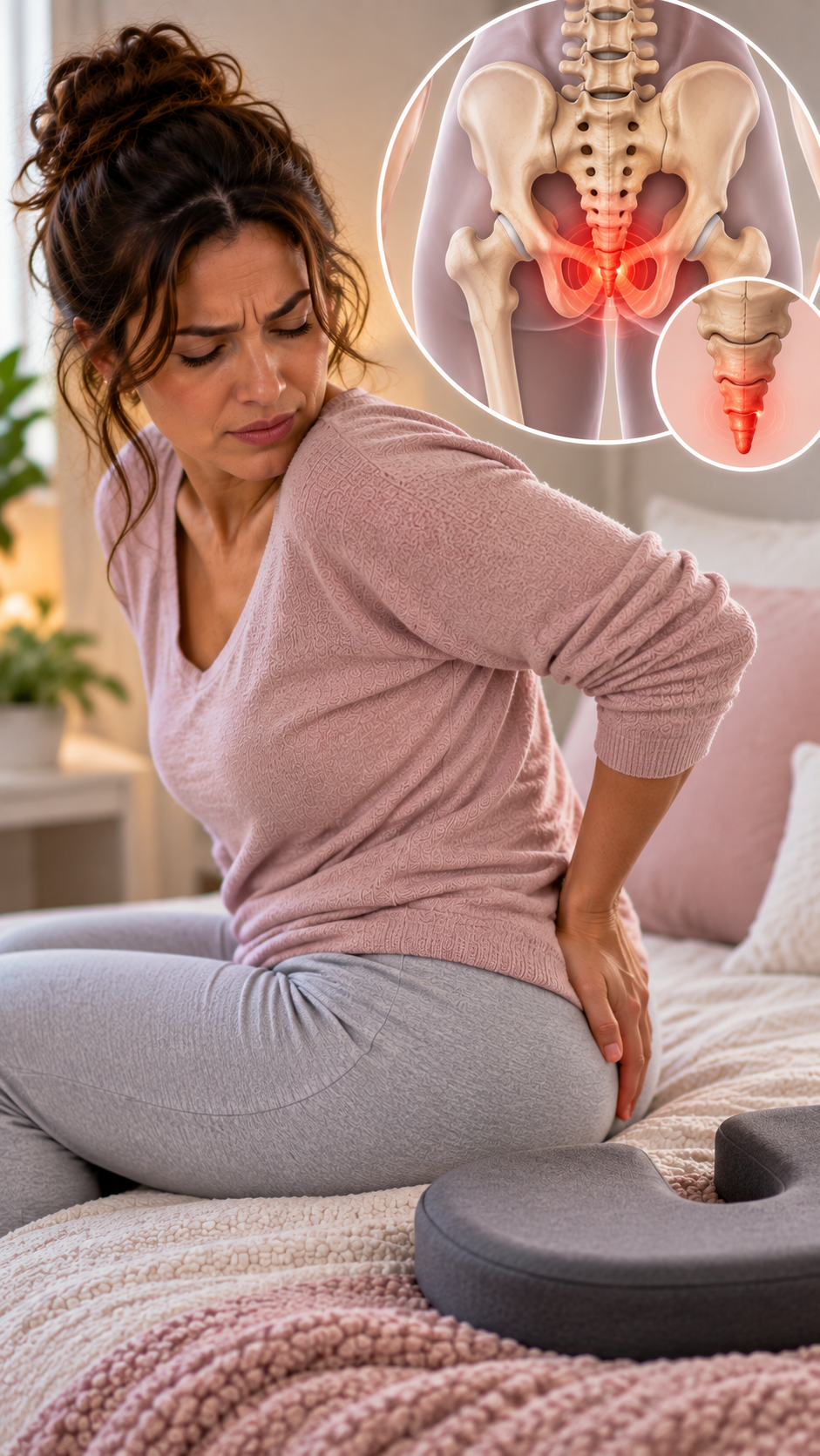
This type of tailbone pain is called coccydynia, also known as coccygodynia. The coccyx is the small bone at the very bottom of your spine, and pain in this region can range from a dull, persistent ache to sharp discomfort with sitting, moving from sitting to standing, bowel movements, or certain activities.
The good news is that many cases can be managed conservatively. But when tailbone pain keeps returning or begins changing how you sit, move, work, exercise, or use the bathroom, it may be worth looking beyond the painful bone itself.
At Peloraa

At Peloraa

At Peloraa, we understand how frustrating tailbone pain can become because sitting is difficult to avoid. You sit to work, drive, eat, feed your baby, travel, relax, and socialize. When each of those activities begins reminding you that your tailbone hurts, something that seems like a small area can have a surprisingly large effect on your life.
Understand your journey

What You Should Know About Coccydynia

Find clear, supportive answers to common questions about urinary incontinence, bladder leakage, symptoms, treatment, and pelvic health physiotherapy.
01

What Is Coccydynia?

Coccydynia is pain around the coccyx, or tailbone, located at the base of the spine just above the buttocks. Although the coccyx is small, it has attachments to muscles,…
Read more...
Coccydynia is pain around the coccyx, or tailbone, located at the base of the spine just above the buttocks. Although the coccyx is small, it has attachments to muscles, ligaments, and connective tissues that interact with the pelvis and pelvic floor.
People with coccydynia commonly notice tenderness directly over the tailbone. The pain may be dull and achy most of the time with occasional sharper episodes. It is frequently worse when sitting, particularly on hard surfaces, and may become painful when moving from sitting to standing or bending forward. Some people also experience discomfort during bowel movements or sexual activity.
For one person, symptoms may improve within weeks after a fall. For another, discomfort may continue for months and gradually affect everyday activities. This is why tailbone pain treatment should consider both what started the problem and what may now be keeping it irritated.
02

Why Does Tailbone Pain Happen?

There is not always one cause of coccydynia. A direct fall onto the tailbone can bruise, fracture, or irritate the coccyx and surrounding tissues. Pregnancy and childbirth can…
Read more...
There is not always one cause of coccydynia. A direct fall onto the tailbone can bruise, fracture, or irritate the coccyx and surrounding tissues. Pregnancy and childbirth can place additional stress through this region, while prolonged sitting, cycling, rowing, and other repetitive activities may repeatedly load the coccyx. Joint mobility can also matter—both excessive and reduced movement around the coccyx have been associated with symptoms. Sometimes no obvious cause can be identified.
Body position can also influence the amount of pressure going through the tailbone. If sitting becomes painful, it is natural to begin shifting your weight to one side, leaning forward, tightening your glutes, or avoiding certain chairs altogether. Those changes may help temporarily, but over time the muscles around the pelvis, hips, and pelvic floor may begin working differently.
This is one reason persistent coccydynia is not always simply about a painful bone.
03

Why Is Coccydynia Often Worse When Sitting?

When you sit, part of your body weight is transferred through the pelvis and tissues surrounding the coccyx. If that area is irritated, prolonged pressure may make symptoms more…
Read more...
When you sit, part of your body weight is transferred through the pelvis and tissues surrounding the coccyx. If that area is irritated, prolonged pressure may make symptoms more noticeable.
You may start choosing only soft chairs, sitting on one hip, standing during meetings, or avoiding long drives. While modifying pressure can be useful during recovery, avoiding sitting completely is rarely practical.
A specially designed coccyx cushion and changes in sitting position can sometimes reduce direct pressure on the tailbone. NHS guidance also recommends avoiding prolonged sitting and maintaining supportive posture while symptoms settle.
At Peloraa, however, we do not want the long-term goal to be simply finding the perfect cushion.
We want to understand why sitting hurts and how we can gradually help you tolerate everyday positions and activities more comfortably again.
04

Why Does It Hurt When I Stand Up From a Chair?

Moving from sitting to standing changes the position and loading of your pelvis and coccyx. If the coccyx or surrounding tissues are sensitive, that transition can produce a…
Read more...
Moving from sitting to standing changes the position and loading of your pelvis and coccyx. If the coccyx or surrounding tissues are sensitive, that transition can produce a sudden sharp pain even when sitting itself feels manageable.
Some people begin using their arms to push themselves out of a chair, shift heavily to one side, or brace their abdomen every time they stand. Over time, these protective movement patterns can become automatic.
Physiotherapy may therefore look not only at the coccyx but also at how your hips, pelvis, back, abdominal muscles, and pelvic floor coordinate when you sit, stand, bend, and move.
05

What Does the Pelvic Floor Have to Do With Tailbone Pain?

The pelvic floor and coccyx are closely connected anatomically. Several pelvic floor muscles and connective tissues attach around the tailbone, which means muscle tension and…
Read more...
The pelvic floor and coccyx are closely connected anatomically. Several pelvic floor muscles and connective tissues attach around the tailbone, which means muscle tension and coccyx pain can sometimes influence each other.
Imagine walking around with your shoulders tightened all day because your neck hurts. Eventually, the muscles themselves may become sore and sensitive.
A similar pattern can happen around the pelvis.
When the tailbone hurts, you may unknowingly tighten your glutes, abdomen, and pelvic floor to protect it. If those muscles remain overactive, they can become tender or have difficulty relaxing. Conversely, excessive pelvic floor muscle tension may sometimes increase pulling or sensitivity around the coccyx.
Recent systematic reviews have found that several physiotherapy approaches—including exercises, manual therapies, and levator ani muscle stretching or massage—can improve pain and function in some people with coccydynia, although the available research is varied and stronger long-term studies are still needed.
This does not mean every person with tailbone pain has a pelvic floor problem.
It means the pelvic floor is one area worth considering when symptoms persist.
06

Why Can Bowel Movements Hurt?

Having a bowel movement requires changes in abdominal pressure and relaxation of the pelvic floor muscles around the rectum and coccyx.If the tailbone is sensitive or the pelvic…
Read more...
Having a bowel movement requires changes in abdominal pressure and relaxation of the pelvic floor muscles around the rectum and coccyx.
If the tailbone is sensitive or the pelvic floor is tense, bowel movements may increase pressure or pulling through the painful area. Constipation and repeated straining can make this even more uncomfortable.
Some people then begin avoiding bowel movements because they expect pain, which may worsen constipation and create an ongoing cycle.
When bowel symptoms are part of your coccydynia experience, pelvic floor physiotherapy may include education about toileting position, breathing, pelvic floor relaxation, and reducing unnecessary straining. Your physician or pharmacist may also provide guidance when constipation requires additional management.
07

What About Coccydynia After Pregnancy or Childbirth?

Pregnancy and childbirth are recognized causes of tailbone pain. During pregnancy, tissues around the pelvis naturally become more flexible, while childbirth can place significant…
Read more...
Pregnancy and childbirth are recognized causes of tailbone pain. During pregnancy, tissues around the pelvis naturally become more flexible, while childbirth can place significant pressure through the coccyx and surrounding pelvic floor structures.
For some people, tailbone pain begins immediately after delivery. Others notice it only after spending more time sitting while feeding their baby or returning to daily activities.
Postpartum coccydynia may also occur alongside pelvic floor weakness or overactivity, perineal pain, abdominal changes, bladder or bowel symptoms, and lower-back or hip discomfort. This is why postpartum treatment should not focus only on the tailbone.
At Peloraa, we consider how the coccyx, pelvic floor, core, hips, back, and postpartum recovery are working together.
How we support you

The Peloraa Way

01

The Peloraa Way: Looking Beyond the Tailbone

At Peloraa, we understand how frustrating tailbone pain can become because sitting is difficult to avoid. You sit to work, drive, eat, feed your baby, travel, relax, and socialize. When each of those activities begins reminding you that your tailbone hurts, something that seems like a small area can have a surprisingly large effect on your life.
Our approach begins by asking more than:
“Where does it hurt?”
We want to understand what started the pain, what continues to aggravate it, how your body has adapted, and what activities you want to return to comfortably.
02

First, We Listen to Your Story

Your first appointment begins with a conversation about when the tailbone pain started and what was happening around that time. We may discuss falls or injuries, pregnancy and childbirth, prolonged sitting, cycling or exercise, bowel symptoms, previous pelvic or spinal surgery, and whether sitting, standing, bending, bowel movements, or intimacy change your symptoms.
We also want to know what tailbone pain is preventing you from doing. Maybe you want to drive to work without shifting constantly in your seat, sit through dinner with your family, return to cycling, comfortably feed your baby, work at your desk, exercise, or simply get out of a chair without anticipating a sharp pain.
Those everyday goals become part of your rehabilitation.
03

We Assess the Whole Coccyx–Pelvic Floor Connection

Coccydynia physiotherapy should involve more than pressing directly on the painful tailbone.
Depending on your presentation, your Peloraa physiotherapist may assess your sitting posture, lower-back and hip movement, pelvic mobility, gluteal muscles, abdominal function, breathing, pelvic floor muscle function, and the movements that reproduce your symptoms.
We may also look at bowel mechanics and pelvic floor relaxation when bowel movements or constipation are contributing to discomfort.
For selected patients, a trained pelvic health physiotherapist may discuss whether an internal rectal pelvic floor assessment could provide additional information about pelvic floor tension, tenderness, or muscle attachment around the coccyx. However, an internal examination is never mandatory. We can begin externally, explain all options, and proceed only with your informed consent.
04

We Reduce Pressure Without Teaching You to Fear Sitting

During the more sensitive stages of coccydynia, reducing direct pressure can be helpful. Treatment may include education about sitting positions, appropriate use of a coccyx cushion, movement breaks, and modifying activities that repeatedly aggravate symptoms.
But the long-term goal is not to make you afraid of chairs.
As symptoms allow, we gradually work toward improving your sitting tolerance and confidence, so you can return to work, driving, travel, and everyday activities without constantly protecting the tailbone.
05

We Address Muscle Tension When It Is Part of the Problem

If your pelvic floor, glutes, hips, or surrounding muscles have become overactive in response to pain, treatment may focus on reducing unnecessary tension and improving movement.
This may include diaphragmatic breathing, pelvic floor relaxation, gentle mobility, muscle lengthening, exercises, posture and movement retraining, and carefully selected manual therapy when appropriate.
Current evidence suggests that physiotherapy can improve pain and function in coccydynia, but there is no single physiotherapy technique proven to be best for everyone. A 2025 systematic review found promising short-term improvements across several interventions while also emphasizing limitations in the current evidence.
That is why Peloraa does not use a one-size-fits-all “tailbone protocol.”
We assess first and treat what your body actually needs.
06

We Help With Bowel Mechanics When Needed

If bowel movements aggravate your tailbone, we may look at whether constipation, repeated straining, breath-holding, or difficulty relaxing the pelvic floor is adding pressure to the area.
Treatment may include bowel positioning, breathing strategies, pelvic floor relaxation, and education about reducing straining. If constipation or other bowel concerns require medical or nutritional management, we may recommend collaboration with your physician, pharmacist, dietitian, gastroenterologist, or another appropriate provider.
07

Coccydynia Care Can Work Better as a Team

Persistent tailbone pain is not always something physiotherapy should manage alone. Depending on your symptoms, Peloraa may collaborate with or recommend further assessment from your family physician, sports medicine physician, physiatrist, orthopedic or spine specialist, pain specialist, pelvic health physician, gynecologist, gastroenterologist, or another appropriate healthcare professional.
If pain continues despite conservative treatment, medical options can include appropriately selected injections around the coccyx or other pain-management procedures. More invasive treatments, including ganglion impar procedures and coccygectomy, may be considered by specialists for carefully selected patients with persistent symptoms, although surgery is generally reserved for uncommon refractory cases.
Our role is not to replace those providers. Peloraa focuses on the movement, pelvic floor, muscle, bowel, sitting, and functional factors surrounding your tailbone pain while collaborating with medical professionals when further investigation or treatment is needed.
Medical care and rehabilitation can work together.
08

We Help You Return to the Life Tailbone Pain Has Interrupted

Successful coccydynia rehabilitation should not simply mean that your tailbone is less tender during an examination.
The bigger question is whether you can return to your life.
Can you sit through your workday more comfortably? Drive without constantly adjusting your position? Exercise again? Sit on the floor with your children? Travel? Have a bowel movement without anticipating pain?
Your rehabilitation should gradually connect what we work on in the clinic with those real-life activities.
Because recovery is not only about asking:
“Does my tailbone hurt less?”
It is also about asking:
“Can I do more without worrying about my tailbone?”
09

Listen. Understand. Unload. Retrain. Rebuild. Return.

That's the Peloraa Way.
A little more clarity

Short FAQs About Coccydynia

01

What does coccydynia feel like?

Read more
Coccydynia commonly causes tenderness and aching directly around the tailbone. Pain may become sharper when sitting, standing up from a chair, bending forward, or having a bowel movement.
02

What causes tailbone pain?

Read more
Common causes include falls, pregnancy and childbirth, prolonged sitting, repetitive activities such as cycling, changes in coccyx joint mobility, and other mechanical factors. Sometimes no clear cause can be identified.
03

Can pelvic floor muscles cause tailbone pain?

Read more
Pelvic floor muscles and tissues attach around the coccyx, so pelvic floor tension or tenderness may contribute to symptoms in some people. However, not every case of coccydynia is caused by the pelvic floor.
04

Can physiotherapy help coccydynia?

Read more
Physiotherapy may help some people by addressing movement, muscle tension, pelvic floor function, posture, and activity tolerance. Recent systematic reviews suggest improvements in pain and function, although the evidence varies among different physiotherapy approaches.
05

Should I use a coccyx cushion?

Read more
A specially designed coccyx cushion may help reduce direct pressure while sitting. It can be useful during recovery, particularly when combined with regular movement and appropriate rehabilitation.
06

Can childbirth cause coccydynia?

Read more
Yes. Pregnancy and childbirth can place stress through the coccyx and surrounding pelvic tissues and are recognized causes of tailbone pain.
07

Do I need an internal pelvic floor examination?

Read more
No. An internal pelvic floor assessment may provide additional information for some patients, particularly when pelvic floor muscle tension or bowel symptoms are involved, but it is never mandatory.
08

When should I see a doctor for tailbone pain?

Read more
Medical assessment is appropriate when pain is severe, persists despite several weeks of conservative care, significantly affects daily life, follows substantial trauma, or occurs with other concerning symptoms.
Your Tailbone Shouldn't Decide Where—or How Long—You Can Sit
You do not need to know whether your pain is coming from the coccyx joint, surrounding muscles, pelvic floor, or another structure before seeking support.
You do not need to be ready for an internal pelvic floor assessment.
And you do not have to spend your entire day searching for the least painful chair.
The first step is understanding what may be contributing to your symptoms.
Book a physiotherapy or pelvic floor physiotherapy assessment with Peloraa for coccydynia, tailbone pain, postpartum coccyx pain, or related pelvic floor symptoms in Barrhaven, Ottawa.
Book an assessment
References & Clinical Credits
  • NHS. Tailbone (Coccyx) Pain. Last reviewed November 20, 2025. Provides current patient guidance regarding coccydynia symptoms, causes, self-management, physiotherapy, injections, and surgical treatment.
  • **Cleveland Clinic. **Tailbone Pain (Coccydynia): Causes, Symptoms & Treatment. Provides clinical information regarding coccydynia symptoms, trauma, pregnancy and childbirth, prolonged sitting, diagnosis, physiotherapy, injections, and surgical options.
  • Sidiq M, et al. Effectiveness of Physical Therapy Interventions for Coccydynia: A Systematic Review With Narrative Synthesis. Archives of Physiotherapy. 2025. Reviewed 10 studies involving 515 adults and found several physiotherapy interventions associated with improvements in pain and function, while emphasizing the need for stronger long-term research.
  • Blanco-Diaz M, et al. Physiotherapy Approaches for Coccydynia: Evaluating Effectiveness and Clinical Outcomes.BMC Musculoskeletal Disorders. 2025. Systematic review evaluating conservative physiotherapy interventions for coccydynia and highlighting both promising results and limitations in the current evidence.
  • Coccygodynia—Diagnosis and Treatment.** 2025.** Reviews diagnostic approaches and conservative, interventional, and surgical management options for persistent coccyx pain.
Medical Disclaimer‍
This information is intended for general educational purposes only and does not replace medical diagnosis, individualized medical advice, or treatment from a physician or other qualified healthcare professional. Coccydynia can have many causes, including musculoskeletal injury, fracture, joint dysfunction, pregnancy or childbirth-related changes, pelvic floor dysfunction, and, much less commonly, infection, tumor, or other medical conditions.
Pelvic floor physiotherapy may help address pelvic floor muscle tension, movement limitations, sitting tolerance, bowel mechanics, and other musculoskeletal contributors to tailbone pain, but it does not independently diagnose or treat every cause of coccydynia.
Seek prompt medical assessment if tailbone pain is associated with significant trauma, fever, a new lump or swelling, unexplained weight loss, rectal bleeding, progressive numbness or weakness, numbness around the groin, difficulty controlling or emptying the bladder or bowel, severe night pain, or rapidly worsening symptoms. Persistent pain that does not improve with conservative treatment should also be medically evaluated.
Peloraa works collaboratively with appropriate healthcare providers when imaging, medication, injections, specialist pain management, or surgical assessment may be required.

our team

The people behind
your care.

Our focus is pelvic health, our purpose is people, and our vision is care that’s there for every body.

- The Co-Founders, Peloraa

Nidhi Parmar & Priya Chikani

our locations

Two locations.
One thoughtful approach.

Find your Peloraa location in Ottawa or Etobicoke, meet your lead therapist, and take your next step.

Contact Us
SOUTHERN ONTARIO, CANADATwo places to feel supported.
Find your care, closer to home.Map data: Ontario · Open Government Licence
PELORAA LOCATIONS

Care, closer to you.

BEYOND THE CLINIC

A little more
PELORAA.

Everyday conversations, a closer look at our care, and moments from our community. Follow along with us on Instagram.

Follow @the_peloraa

A few moments from @the_peloraa. Swipe to explore on mobile.